The History of the Jaipur Foot: How BMVSS Built a Global Model for Low-Cost Prosthetic Care
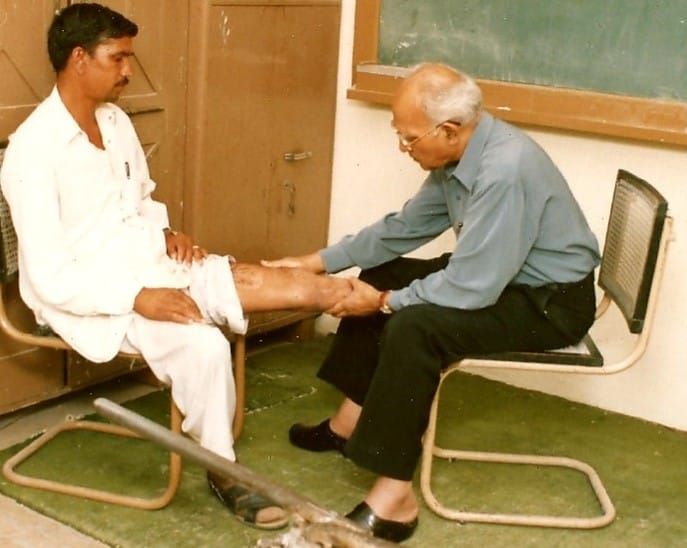
The Jaipur Foot is one of India’s most important contributions to global prosthetic rehabilitation. Developed to meet the real-life needs of amputees in India and other low-resource settings, it became known for its affordability, practicality and ability to support culturally important movements such as squatting, sitting cross-legged and walking barefoot. Today, its name is closely associated with Bhagwan Mahaveer Viklang Sahayata Samiti, widely known as BMVSS, the Jaipur-based charitable organisation that has taken the technology to millions of people in India and internationally.
Origins of the Jaipur Foot
The Jaipur Foot was developed in Jaipur in the late 1960s through the work of orthopaedic surgeon Dr. P. K. Sethi and craftsman Ram Chandra Sharma. Their innovation was shaped by a simple but powerful question: how could a prosthetic foot be made suitable for the daily life of people in India, especially those living in rural or low-income communities? Conventional prosthetic feet at the time were often costly and less suitable for users who needed to walk on uneven ground, work in fields, sit on the floor or move without shoes.
The result was a durable, flexible and low-cost prosthetic foot that could better match local living conditions. The Jaipur Foot became known for its rubber-based construction, multi-axial movement and ability to provide functional mobility at a fraction of the cost of many imported prosthetic systems.
The Founding of BMVSS
While the Jaipur Foot was invented before BMVSS was created, it was Bhagwan Mahaveer Viklang Sahayata Samiti that transformed it from a local innovation into a large-scale humanitarian rehabilitation model. BMVSS was established in Jaipur in 1975, with the organisation’s official history stating that it was set up to commemorate the 2500th year of nirvana of Bhagwan Mahaveer.
The organisation was founded with a mission to provide physical and socio-economic rehabilitation to people with disabilities, especially those without the financial means to access prosthetic care. From the beginning, BMVSS adopted a defining principle: artificial limbs, calipers and other mobility aids would be provided free of cost to beneficiaries.
From Local Service to National Movement
BMVSS began with modest activity, but its impact expanded rapidly. The organisation’s model combined affordable technology, simplified manufacturing, clinical fitting, community outreach and a strong charitable mission. This allowed BMVSS to serve people who might otherwise never have received a prosthetic limb or mobility aid.
Over time, BMVSS developed a pan-Indian presence, with centres across major cities and regions. Publicly available profiles note that the organisation has branches and limb-fitment centres across India, including cities such as Delhi, Mumbai, Chennai, Hyderabad, Bengaluru, Varanasi and Patna.
Why the Jaipur Foot Was Different
The success of the Jaipur Foot was not only about cost. Its importance came from the fact that it was designed around the user’s environment. In India and many other countries, people may need to sit on the ground, squat for daily activities, walk barefoot indoors, work in agricultural settings or move across rough surfaces. Many conventional prosthetic designs were not created with these needs in mind.
The Jaipur Foot helped address this gap. Its flexibility and functional design made it more acceptable and practical for many users. It also demonstrated that innovation in prosthetics does not always have to mean higher cost. In some contexts, the most meaningful innovation is a device that is locally appropriate, repairable, accessible and available to the people who need it most.
A Free-of-Cost Rehabilitation Model
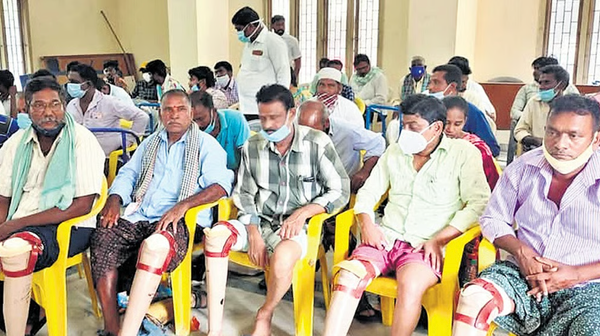
BMVSS’s free service model became central to its identity. The organisation provides artificial limbs, calipers and other aids and appliances without charging beneficiaries. This approach made it especially important for people living below the poverty line, rural communities, accident survivors, polio-affected individuals and others who lacked access to expensive rehabilitation services.
This model has helped BMVSS become one of the best-known rehabilitation charities in the world. The organisation states that it has provided more than two million free limbs and assistive devices through its work since 1975.
International Reach and Humanitarian Impact
The Jaipur Foot also became a symbol of Indian humanitarian innovation abroad. BMVSS has delivered services not only across India but also through international camps and partnerships. Its model has been used in countries affected by poverty, conflict, landmine injuries and limited access to prosthetic care.
This global work helped position the Jaipur Foot as more than a prosthetic product. It became part of a wider movement for dignity, mobility and social inclusion. For many amputees, receiving a limb meant the possibility of returning to work, education, family life and community participation.
Innovation Beyond the Jaipur Foot
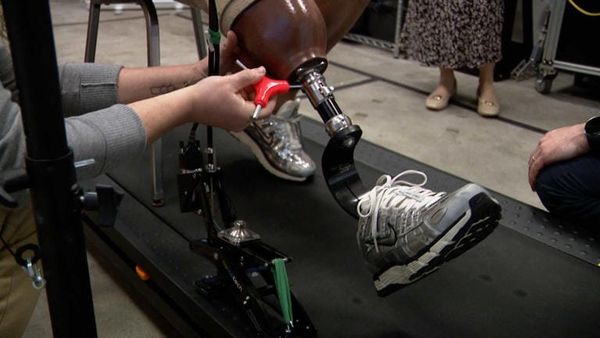
BMVSS has also been associated with further prosthetic innovation, including the Stanford-Jaipur Knee, a low-cost prosthetic knee developed through collaboration with Stanford-linked teams. The Harvard Business School case on BMVSS highlights the organisation’s patient-centric culture, focus on innovation and role in developing the Stanford-Jaipur Knee.
This reflects an important part of BMVSS’s history: the organisation did not simply distribute a device. It helped build an innovation ecosystem around affordable rehabilitation, combining engineering, clinical service, social mission and international collaboration.
A Legacy of Dignity and Access
The history of the Jaipur Foot produced and distributed by BMVSS is ultimately a story about access. It shows how a prosthetic solution designed for local realities can become globally relevant when paired with a strong delivery model and humanitarian purpose.
For India, the Jaipur Foot remains a landmark in assistive technology and rehabilitation. For the global O&P community, it is a reminder that prosthetic success should not be measured only by technical sophistication, but also by reach, affordability, usability and the dignity it restores to people’s lives.
BMVSS turned the Jaipur Foot into a movement. Its history continues to influence how clinicians, technicians, NGOs and policymakers think about prosthetic care in low-resource settings: not as a luxury service, but as an essential pathway to mobility, independence and inclusion.