Hyderabad’s Bionic Hand Innovation Highlights India’s Growing Strength in Affordable Prosthetics
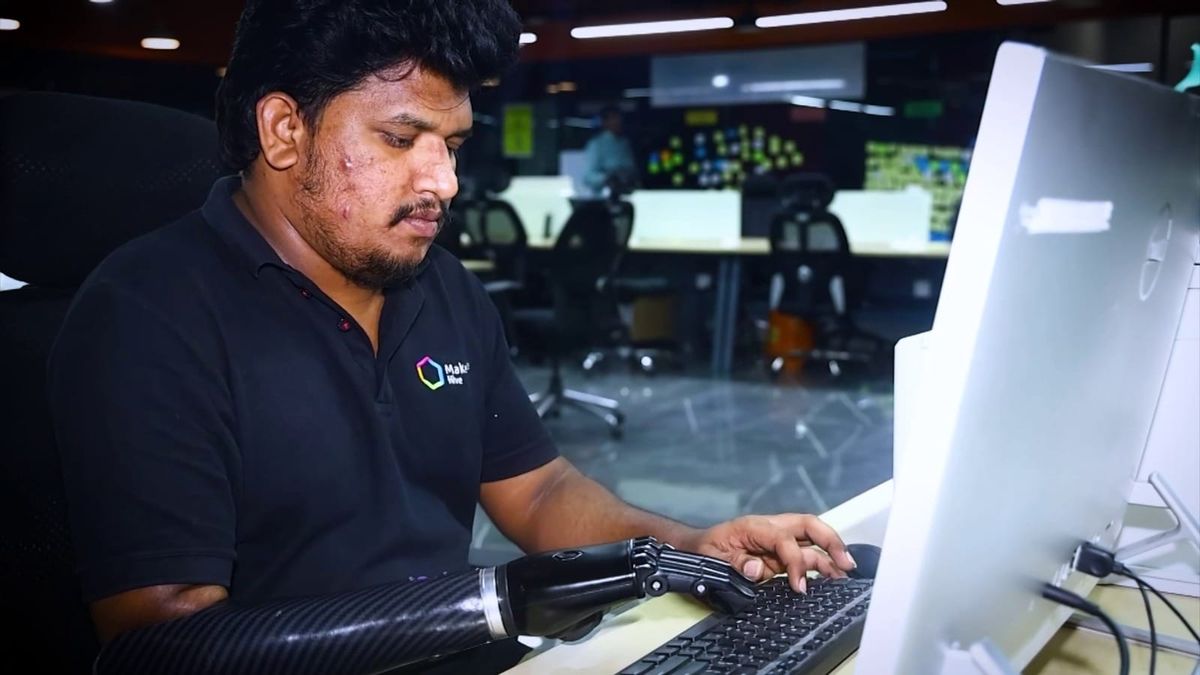
Hyderabad-based deep-tech company Makers Hive is drawing attention for its work in affordable bionic prosthetics, particularly through KalArm, a lightweight, 3D-printed myoelectric hand designed to restore functional independence for upper-limb amputees. The company’s work was recently highlighted through the story of Vamsi, a young user who lost his hand in an electrical accident in 2017 and now uses the bionic hand for everyday tasks including typing, preparing food and riding a bike.
For Bharat CPO, this story is important because it reflects a wider shift in Indian prosthetics: advanced upper-limb technology is no longer only an imported, high-cost category. Indian engineering, 3D printing, electronics and clinical collaboration are beginning to create more accessible options for patients who need functional prosthetic hands.
From Limb Loss to Independence
The original report describes Vamsi’s journey from traumatic limb loss to renewed independence. After losing his hand in 2017, he began using a Makers Hive bionic hand and has reportedly used it for around two and a half years. His experience shows the practical value of upper-limb prosthetic technology when it supports daily activities, work participation and confidence.
For CPOs, this is the real measure of success. A prosthetic hand should not be judged only by its design, number of grip patterns or technical appearance. It must help the user return to meaningful daily function.
That function may include:
- Typing and office work
- Holding household objects
- Preparing food
- Carrying items
- Personal independence
- Social confidence
- Work participation
- Reduced dependence on family members
In upper-limb prosthetics, even small gains in functional control can have a major impact on dignity and daily life.
What Is KalArm?
KalArm is described as Makers Hive’s flagship bionic hand. It is a low-cost, lightweight, 3D-printed myoelectric prosthetic hand designed for customisation and accessibility. According to the report, it offers up to 18 grip patterns and is priced under Rs 5 lakh, compared with many imported bionic hands that can cost far more.
This cost difference is central to the Bharat CPO story. For many Indian patients, advanced prosthetic hands remain financially out of reach. A domestically developed myoelectric hand has the potential to reduce dependence on expensive imports and create a more realistic pathway for wider access.
However, affordability should not only be compared with international devices. For many Indian families, even Rs 5 lakh is still a major cost. The next stage for the sector will require partnerships with CSR programmes, hospitals, NGOs, government schemes, insurers and rehabilitation networks to make such devices accessible to more users.
Why Indian CPOs Should Pay Attention
Upper-limb prosthetics is one of the most challenging areas of prosthetic practice. Patient expectations can be high, but functional outcomes depend on many factors beyond the device itself.
For CPOs, bionic hands require careful attention to:
- Residual limb assessment
- Socket comfort and suspension
- Electrode placement
- Myoelectric signal training
- Patient education
- Functional task training
- Maintenance and repair support
- Follow-up and adjustment
- Realistic goal setting
A bionic hand is not a simple product delivery. It is a clinical and rehabilitation pathway.
This is why the role of trained CPOs, occupational therapists, physiotherapists, rehabilitation physicians and engineers becomes essential. Technology can provide the tool, but clinical training helps the patient use it effectively.
Indian Innovation and Local Manufacturing
The Makers Hive story also reflects India’s growing capability in assistive technology manufacturing. The company’s process reportedly includes design, 3D printing, assembly and quality checks, with a focus on durability, precision and user comfort.
For India’s O&P sector, local manufacturing offers several potential advantages:
- Lower cost compared with imported devices
- Faster customisation
- Better local repair and service support
- More culturally relevant design
- Greater scope for patient feedback
- Stronger domestic medtech capacity
- Reduced dependence on international supply chains
This is especially important in upper-limb prosthetics, where maintenance, software support, socket integration and training can be as important as the original fitting.
Beyond Technology: Confidence, Work and Dignity
The most powerful part of the Hyderabad story is not only the device itself. It is the change in the user’s life.
Vamsi’s journey also reportedly includes working with Makers Hive, the company that developed the hand he uses. That detail is important because it shows how assistive technology can support more than physical function. It can support employment, identity, confidence and social participation.
For Bharat CPO, this is the message that should guide the profession: prosthetic care is not just about replacing a missing limb. It is about helping people return to education, work, family life and public participation.
Bharat CPO Perspective
Makers Hive and KalArm represent an encouraging direction for Indian prosthetics. The combination of myoelectric control, 3D printing, local engineering and lower-cost manufacturing could make advanced upper-limb prosthetics more relevant to Indian patients.
But the future of bionic hands in India will depend on more than innovation alone. It will require strong clinical integration, trained CPO involvement, patient selection, therapy support, long-term servicing and funding models that reach beyond the urban private market.
For Indian CPOs, the lesson is clear. The next generation of prosthetic care will require closer collaboration between clinicians, engineers, manufacturers, educators and rehabilitation teams. Devices like KalArm show what is possible when Indian innovation focuses on real human needs.
Hyderabad’s bionic hand story is not only a technology story. It is a sign that India’s O&P sector can build solutions that are affordable, functional and globally relevant, while keeping patient independence at the centre.