India’s Prosthetics Market Is Growing, But Access to Modern Rehabilitation Technology Remains Uneven
India’s prosthetics market is gaining momentum as new technologies, private providers, rehabilitation networks and assistive device innovators enter the sector. But the country still faces a major challenge: access to modern prosthetic and orthotic care remains uneven, particularly for patients outside major urban centres.
A recent BioSpectrum India feature highlighted a central issue for the sector: India’s prosthetics market continues to face unequal access to advanced rehabilitation technologies and trained specialists. The article also frames the discussion around the plans of Motorica, a prosthetics and assistive technology company, for the Indian and global markets.
For Bharat CPO readers, the story reflects one of the most important realities in Indian rehabilitation today. India is not short of need, ambition or innovation. The challenge is building a system where modern prosthetic care, trained clinical support and long-term rehabilitation are available to more people, not only those who can reach specialist centres in larger cities.
A Market with Strong Potential
India’s prosthetics and orthotics sector is expanding as awareness of mobility solutions increases and more patients seek functional, cosmetic and technology-enabled devices. Growth is being supported by several forces:
- Rising demand for prosthetic limbs after trauma, diabetes-related amputations and vascular disease
- Increased visibility of advanced prosthetic technologies
- Growth in private rehabilitation providers and specialist clinics
- Greater interest in robotic and digital rehabilitation
- The role of NGOs and distribution camps in reaching underserved populations
- Innovation from Indian and international assistive technology companies
However, market growth alone does not guarantee access. A growing market can still leave many patients behind if services remain concentrated, unaffordable or disconnected from long-term rehabilitation.
Uneven Access Remains the Core Challenge
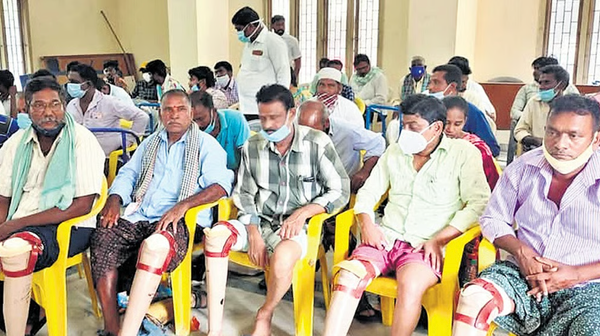
One of the biggest barriers in India is geography. Modern prosthetic and orthotic services are still more easily available in major cities, while patients in rural and semi-urban regions often depend on camps, charitable programmes, government schemes or long-distance travel.
This creates a two-speed system. Some patients can access advanced componentry, digital fitting, structured gait training and multidisciplinary rehabilitation. Others receive limited services, delayed follow-up or no prosthetic care at all.
A recent policy-focused preprint on prosthetic and orthotic service gaps in India describes access to P&O and related assistive services as uneven, with systemic causes linked to workforce, supply chain, financing and governance challenges. The paper argues that these gaps should be understood as health-system issues rather than isolated service problems.
Technology Is Advancing Faster Than Access
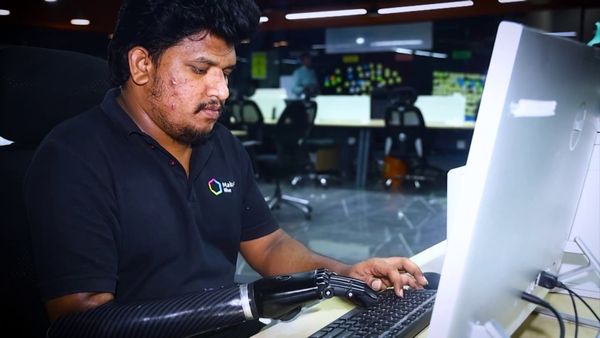
Modern prosthetic technology is improving rapidly. Around the world, users can now benefit from lighter materials, microprocessor components, myoelectric control, 3D design, digital scanning, improved socket systems and more personalised rehabilitation pathways.
But in India, the availability of these technologies is inconsistent. High-end devices are often expensive, imported or limited to specific providers. Even when technology is available, patients still need proper assessment, fitting, training, maintenance and follow-up.
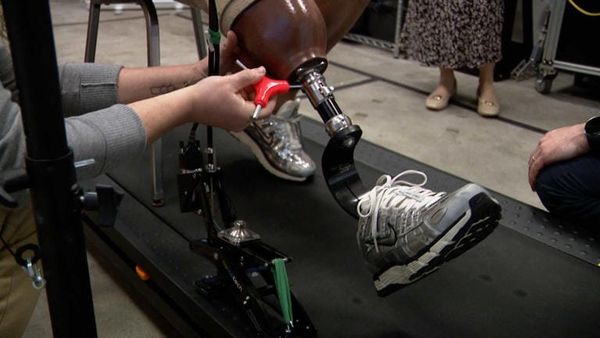
This is where the role of trained orthotists, prosthetists, physiotherapists, rehabilitation physicians and technicians becomes critical. A prosthetic limb is not simply a product. It is part of a clinical pathway that includes evaluation, prescription, fabrication, alignment, gait training, review and long-term adjustment.
The Workforce Question
India’s rehabilitation future depends not only on better devices, but also on stronger professional capacity. Trained prosthetists and orthotists are essential for safe and effective mobility care, especially as more advanced technologies enter the market.
Without enough qualified professionals, patients may receive devices that are poorly matched to their clinical needs, lifestyle, environment or rehabilitation goals. This can lead to discomfort, non-use, skin problems, poor gait outcomes and reduced confidence.
For India’s O&P sector, workforce development must therefore be treated as a national priority. More training, continuing education, clinical mentorship and regional service development will be needed if advanced prosthetic care is to reach beyond a limited number of centres.
Why NGOs, Camps and Public Programmes Still Matter
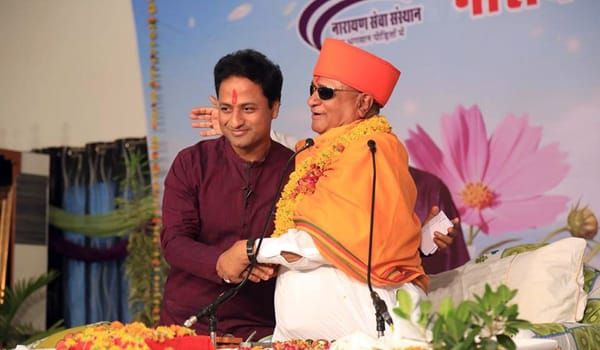
India has a long history of charitable and community-based prosthetic provision, including NGO-led camps and large-scale assistive device distribution programmes. These efforts remain vital because they reach people who may otherwise have no access to mobility care.
However, the next stage of development should focus on connecting camps and distribution models with stronger clinical follow-up. Patients need more than a one-time fitting. They need review, repair, gait training, socket adjustment, replacement planning and support as their physical needs change.
A more integrated model could combine the strengths of NGOs, government programmes, private clinics, hospitals and technology companies. This would help ensure that affordability and access are matched with quality, safety and continuity of care.
The Opportunity for India
India has the potential to become one of the world’s most important markets for accessible prosthetic and orthotic innovation. The country has the scale, clinical need, manufacturing capability, engineering talent and rehabilitation workforce to build new models of care.
The opportunity is not only to import advanced technology, but to adapt it for Indian realities. That means designing solutions that are affordable, durable, repairable, locally supported and suitable for diverse environments, from urban workplaces to rural communities.
The future of India’s prosthetics sector will depend on whether innovation can be matched with access. If advanced devices remain limited to a small group of patients, the market will grow but the public health impact will remain restricted. If technology, training and service delivery expand together, India could set a new benchmark for inclusive rehabilitation.
What This Means for Bharat CPO
For Bharat CPO, this story is important because it captures the direction of India’s O&P sector. The country is moving toward a more technology-enabled rehabilitation future, but the fundamentals remain the same: access, training, affordability and patient-centred care.
India’s prosthetics market is not only a commercial opportunity. It is a national rehabilitation challenge. The next phase must focus on connecting innovation with the patients, clinicians and communities that need it most.
- BioSpectrum India
- Original BioSpectrum India article
- World Health Organization – Rehabilitation
- World Health Organization – Assistive Technology
- International Society for Prosthetics and Orthotics
- Rehabilitation Council of India
- Artificial Limbs Manufacturing Corporation of India
- BMVSS / Jaipur Foot official website