History of ALIMCO: India’s Public Sector Backbone for Prosthetics, Orthotics and Assistive Devices

The Artificial Limbs Manufacturing Corporation of India, better known as ALIMCO, holds a unique place in the history of prosthetics, orthotics and assistive technology in India. For more than five decades, ALIMCO has been one of the country’s most important public-sector institutions supporting access to artificial limbs, orthotic appliances, mobility aids and rehabilitation devices for persons with disabilities.
For Indian CPOs, ALIMCO is more than a manufacturer. It represents a national model of state-supported assistive device provision, linking manufacturing, distribution, government welfare schemes, camps, institutional partnerships and disability inclusion.
Origins: A Public Mission Established in 1972
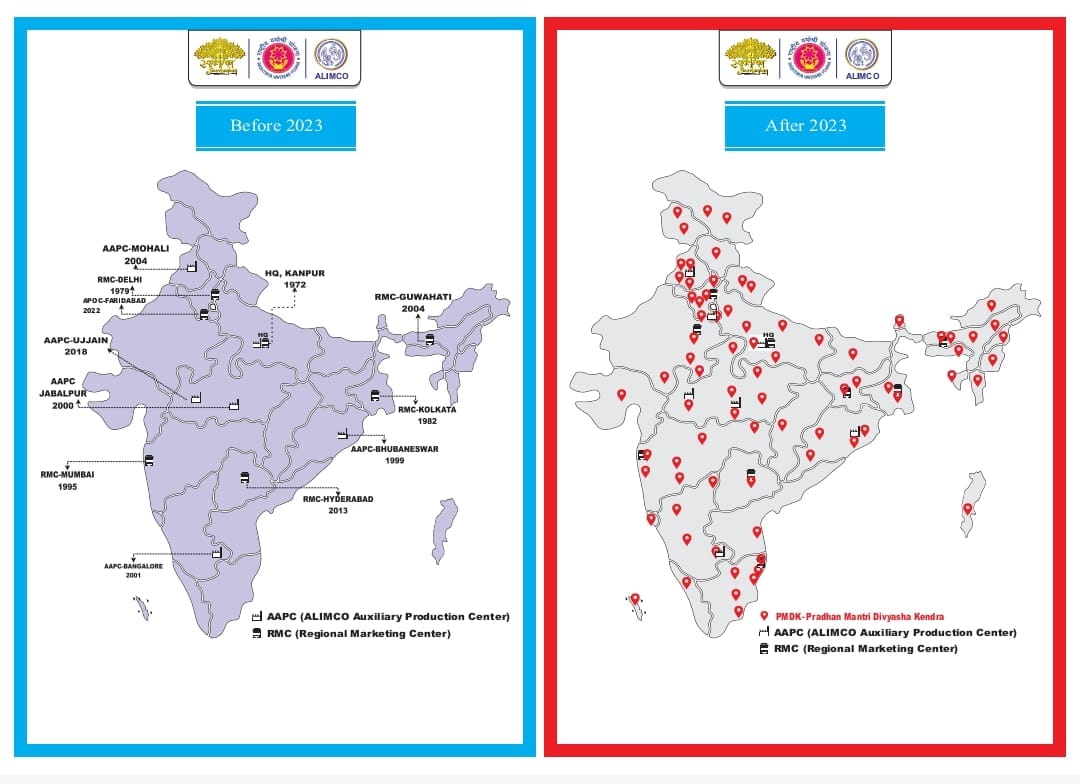
ALIMCO was incorporated on 30 November 1972 under Section 25 of the Companies Act, 1956, now corresponding to Section 8 of the Companies Act, 2013. It was established as a company with charitable objectives, rather than as a conventional profit-driven manufacturer. Today, it functions as a Government of India enterprise under the Department of Empowerment of Persons with Disabilities, Ministry of Social Justice and Empowerment.
This founding structure is important. From the beginning, ALIMCO was created to serve a social and rehabilitation purpose: to manufacture and distribute aids and appliances for persons with disabilities at scale. In a country with a large population, diverse geography and major disparities in access to rehabilitation services, the need for a national assistive device manufacturer was clear.
Kanpur as the Manufacturing Base
ALIMCO’s headquarters and main manufacturing base are in Kanpur, Uttar Pradesh, a historically important industrial city. Its location near Kanpur’s industrial ecosystem helped support the development of production capacity for prosthetic, orthotic and rehabilitation products.
The corporation began manufacturing artificial aids and appliances in the mid-1970s, helping India move toward domestic production of assistive devices rather than relying only on imported products or fragmented local supply. A government-linked profile notes that ALIMCO started manufacturing artificial aids and appliances in 1976.
For Indian CPOs, this period matters because it helped lay the groundwork for a more organised national supply chain for prosthetic and orthotic components, mobility aids and rehabilitation appliances.
A Not-for-Profit Public Sector Enterprise
ALIMCO was set up under a not-for-profit framework. A 2015 Government of India release described it as a fully owned Government of India undertaking working under the Ministry of Social Justice and Empowerment, established under Section 25 of the Companies Act, 1956.
Its purpose has therefore been different from that of private O&P suppliers. ALIMCO’s role has been to support affordable and accessible assistive technology, especially for people who may otherwise struggle to obtain prosthetic limbs, orthotic devices, wheelchairs, mobility aids, hearing aids or other rehabilitation products.
This public-service identity continues to shape how ALIMCO is understood in the Indian disability and rehabilitation sector.
Expansion of Product Categories
Over time, ALIMCO expanded beyond artificial limbs into a much wider portfolio of assistive devices. Its work has included prosthetic components, orthotic appliances, mobility aids, walking aids, special devices for children, devices for visually impaired persons, hearing-related aids and other rehabilitation products.
ALIMCO describes itself as the only manufacturing company producing various types of assistive devices under one roof to serve multiple disability categories across India.
For CPOs, this broad product base is important because it shows how prosthetics and orthotics sit within a wider assistive technology ecosystem. A patient may need a prosthesis, but may also need mobility support, seating, orthotic follow-up, therapy, training, assistive products and long-term rehabilitation planning.
The ADIP Scheme and National Distribution
ALIMCO became closely associated with India’s public distribution of aids and appliances, particularly through the Assistance to Disabled Persons for Purchase/Fitting of Aids and Appliances Scheme, commonly known as the ADIP Scheme.
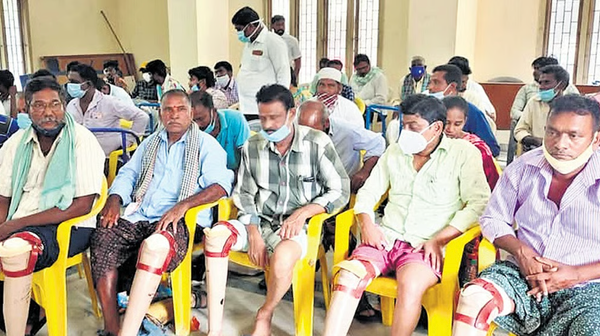
Through government camps and institutional partnerships, ALIMCO has helped deliver assistive devices to large numbers of persons with disabilities. The ADIP-linked model has been especially significant for people who cannot afford private-market devices or who live far from major rehabilitation centres.
For Bharat CPO, this is one of the central lessons of ALIMCO’s history: access to assistive technology in India has not been built only through clinics and hospitals. It has also been built through public schemes, outreach camps, district-level mobilisation and government-supported distribution systems.
Scale, Camps and Public Recognition
ALIMCO’s national role has expanded through large-scale distribution camps and partnerships with government departments, public institutions and implementation agencies. The Department of Empowerment of Persons with Disabilities notes that ALIMCO has conducted mega distribution camps, achieved multiple Guinness World Records in the name of ALIMCO and the Ministry, and received awards including the SCOPE Excellence Award and Vayoshreshtha Samman for services toward senior citizens.
These achievements reflect ALIMCO’s scale, but they also raise an important professional question for Indian CPOs: how can mass distribution be combined with high-quality assessment, fitting, follow-up and user education?
That question remains central to the future of public assistive technology delivery in India.
ALIMCO and the Indian CPO Profession
ALIMCO’s history has influenced the Indian O&P profession in several ways.
First, it helped create a national reference point for assistive device manufacturing and distribution. Second, it supported public awareness of prosthetic and orthotic needs. Third, it contributed to a supply ecosystem in which government schemes, hospitals, NGOs, camps and clinical professionals could access products for large-scale service delivery.
At the same time, the role of CPOs remains essential. Manufacturing a device is only one part of the rehabilitation pathway. Assessment, measurement, prescription, alignment, fitting, gait training, review and long-term follow-up require professional clinical judgement.
This is where the partnership between public manufacturing and trained CPO practice becomes critical.
Modernisation and the Future of ALIMCO
In recent years, ALIMCO has continued to operate as a central public-sector enterprise in India’s disability and assistive technology landscape. Its official company profile identifies it as a Mini-Ratna Category II Central Public Sector Enterprise under the Department of Empowerment of Persons with Disabilities.
The future challenge for ALIMCO will be shaped by several major trends:
- Rising demand for prosthetic and orthotic services due to trauma, diabetes, vascular disease and ageing
- Increasing expectations for device quality, comfort and long-term outcomes
- Growth of digital measurement, 3D scanning, CAD/CAM and additive manufacturing
- Greater need for traceability, clinical data and outcome monitoring
- Demand for better follow-up after mass distribution camps
- The need to connect public provision with professional CPO-led rehabilitation
For India, ALIMCO’s next phase should not only be about producing more devices. It should also be about supporting better clinical pathways, stronger professional collaboration and measurable user outcomes.
Bharat CPO Perspective
ALIMCO is one of the most important institutions in the history of Indian assistive technology. Its establishment in 1972 created a public-sector platform for manufacturing and distributing artificial limbs and rehabilitation aids at national scale. Over the decades, it has helped bring assistive devices to millions of people through government-supported systems, outreach programmes and institutional partnerships.
For Bharat CPO, the story of ALIMCO is also a reminder that access and quality must move together. India needs strong public-sector manufacturing, but it also needs trained CPOs, better fitting systems, digital workflows, patient education and follow-up models that ensure devices are not only delivered, but used successfully.
ALIMCO’s legacy is significant. Its future relevance will depend on how effectively it continues to support India’s changing rehabilitation needs while working alongside clinicians, technicians, educators, government agencies and assistive technology innovators.